|
H M Bateman 1887 - 1970
20th century cartoonist and caricaturist
- Page 2
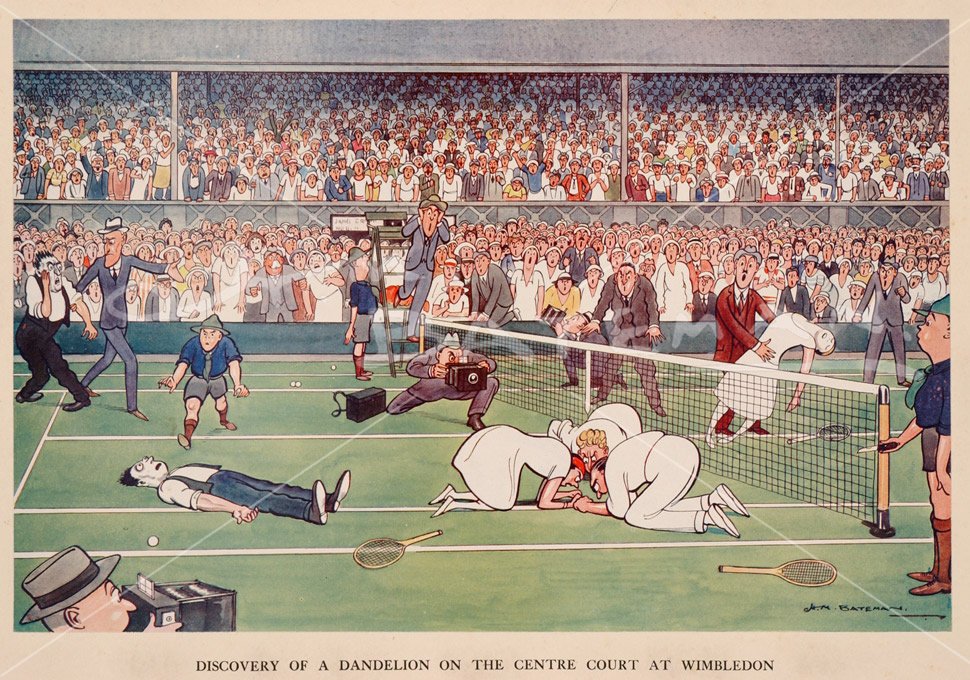
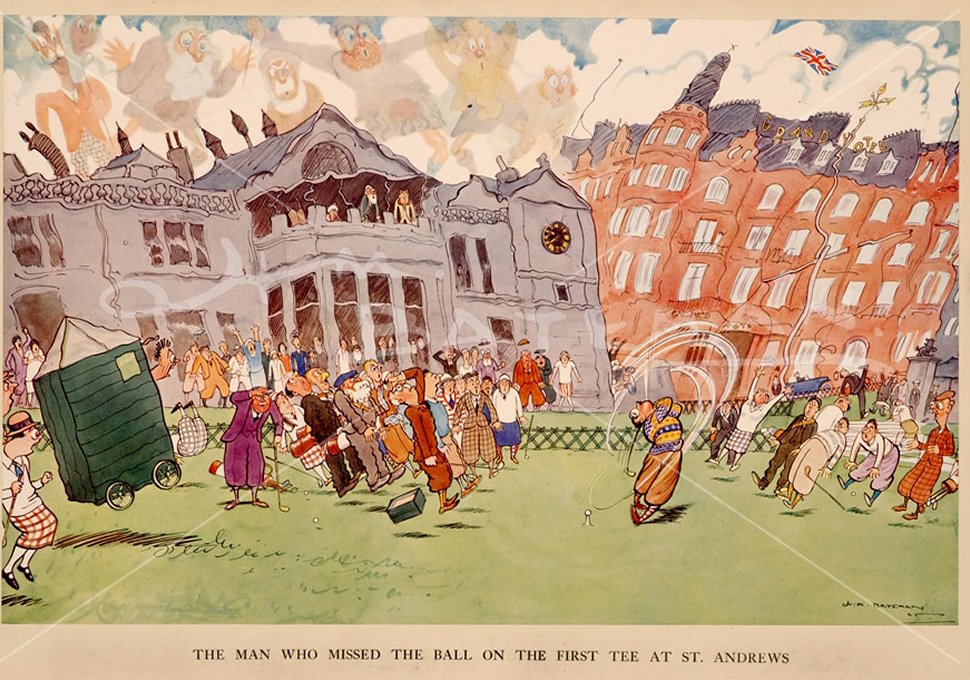
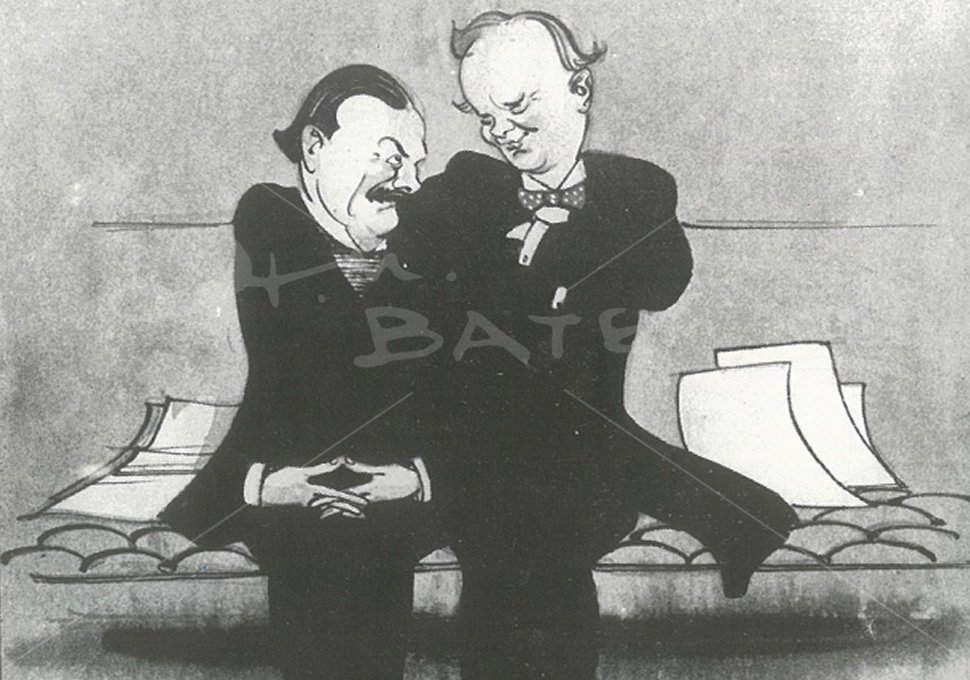
He made three great and radical contributions to the art of the cartoon
in this country. The first came in 1908 when, aged 21, he suffered a
nervous breakdown probably caused by the dreadful choice he had to make
between pushing forward with his career as a cartoonist, already much in
demand, or trying to become a “serious” painter. This derangement,
coupled with an absolute devotion to the surreal madness of Music Hall
comedians, seems to have given him a new intensity, a highly charged way
of working. At a stroke he did away with the conventional stillness –
not to say stiffness - of cartoon figures and, as he himself put it,
“went mad on paper”. Until this time conventional cartoons had been
illustrated jokes – drawings with a few lines of text or dialogue
underneath. Take away the dialogue and the drawing becomes meaningless,
the joke lay in the words. From 1909 onwards Bateman drew no more
illustrated jokes and so changed profoundly the art of the cartoon,
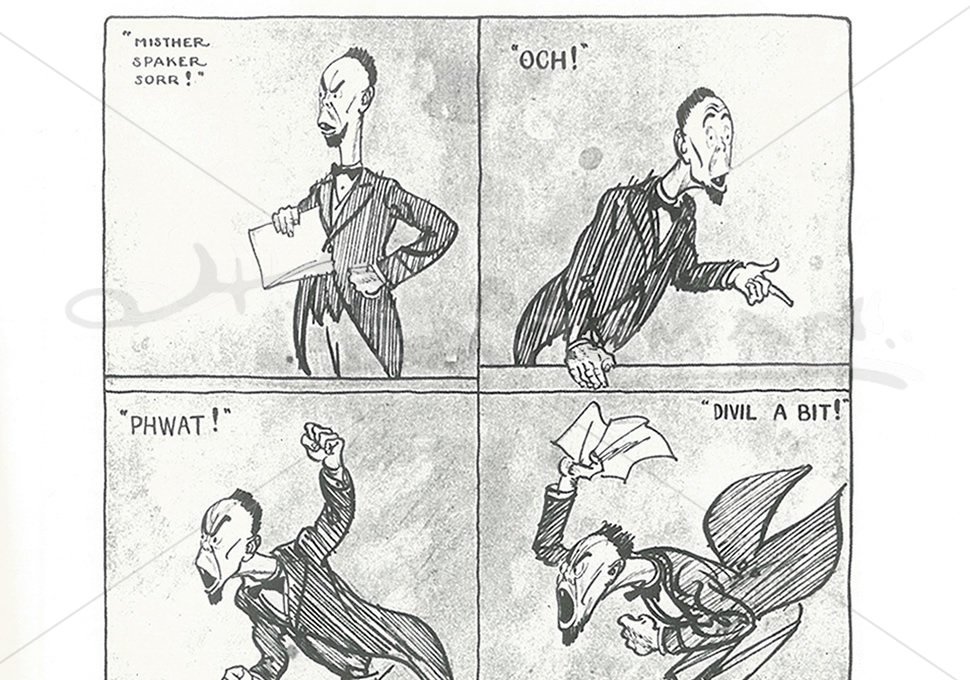
invested it with a new freedom of line and expression. The drawing
became funny in itself, self-explanatory. He made emotion the subject of
his cartoons and the characters became actors expressing feeling, rather
than illustrations to an idea. This was a new, histrionic, hyperbolic
creative method and its effects are still apparent amongst some of our
greatest cartoonists today.

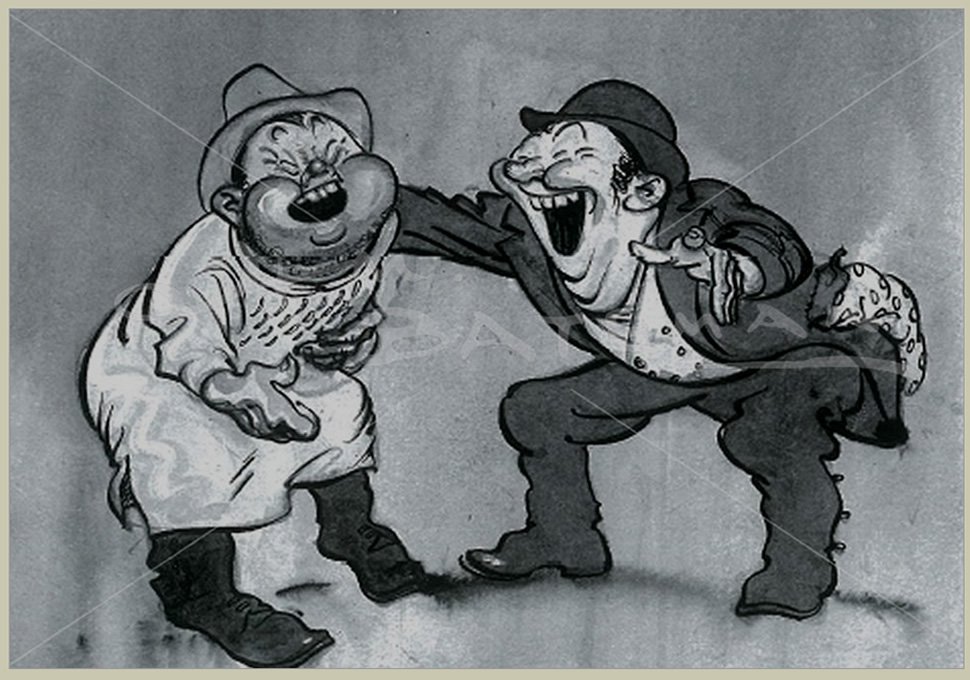
The Buck and Wing Dancer
The second great and innovative contribution Bateman made to the art of
the cartoon came during the First World War. He had been rejected by the
army and retreated ill and deeply depressed to a remote inn on Dartmoor.
But he worked prodigiously and started to produce, in 1916, astonishing
strip cartoons that immediately gripped the public and the attention of
his fellow artists. As a child he had been an avid reader of the new
comic papers and these were, of course, full of comic strips. But these
stories and adventures, full of invention and wonderful comic characters
though they were, relied again on the story underneath, or
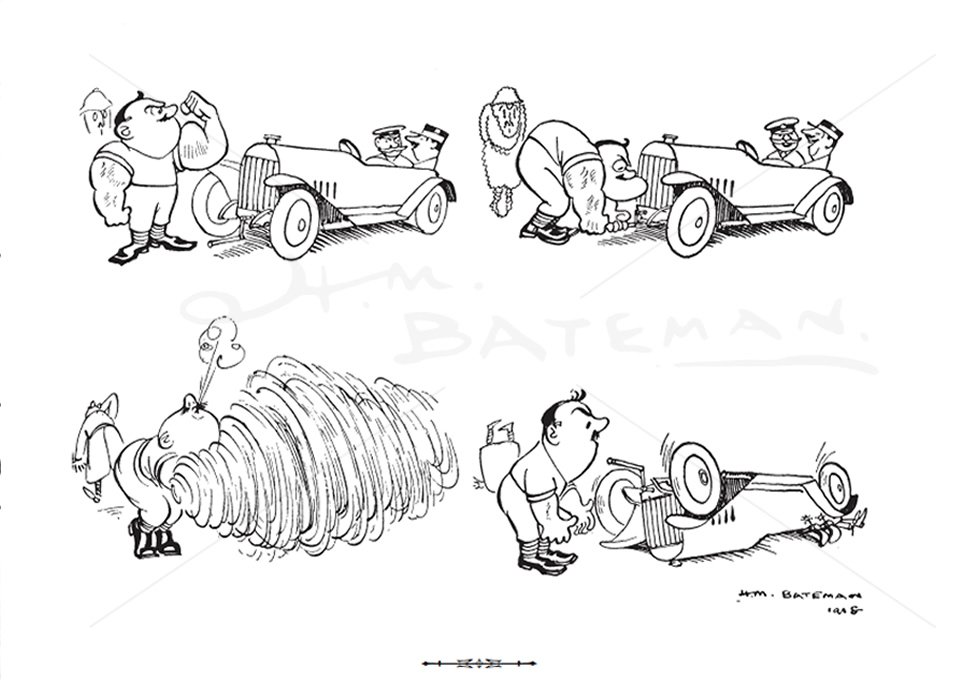
speech-bubbles within, and were childish and simple. What Bateman did
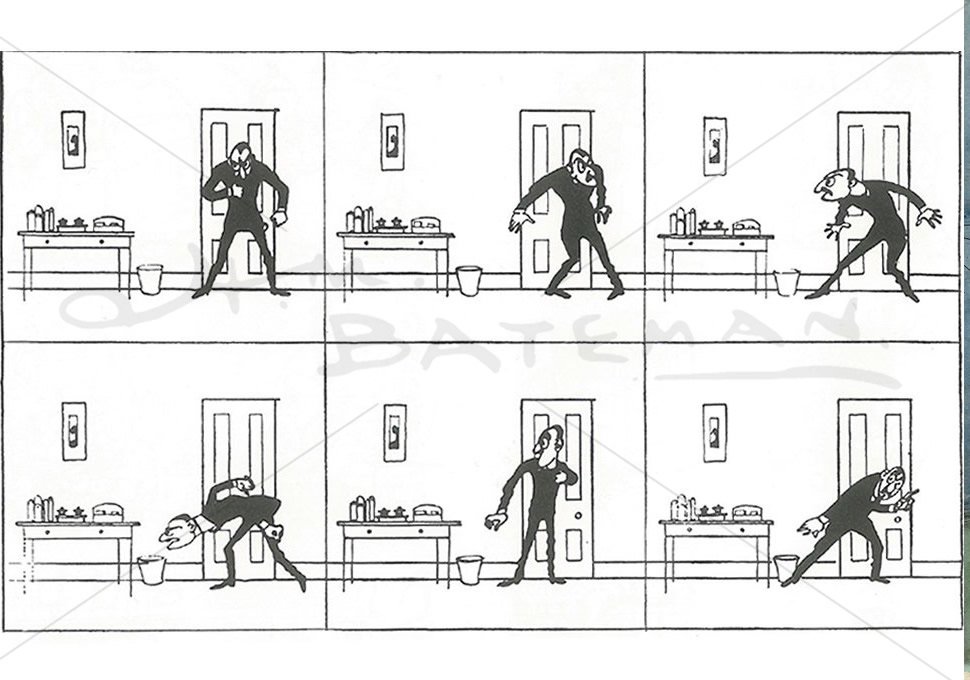
was to create self-contained strip cartoons without words, brilliant,
innovative, cinematic comic stories, adult, often harsh and macabre, and
frequently – at this period – to do with themes of guilt, punishment,
retribution and death. Cartoons like The Boy Who Breathed on the Glass
at the British Museum, The Guest Who Filled his Fountain Pen with Hotel
Ink or

The Guest Who Filled his Fountain Pen with
Hotel Ink
Mexicans at Play are all wonderfully humorous but also harsh and
complex and they come as a tremendous shock amongst the predictable
pages of Punch or The Tatler. Nothing like them had been seen in this
country before.
|